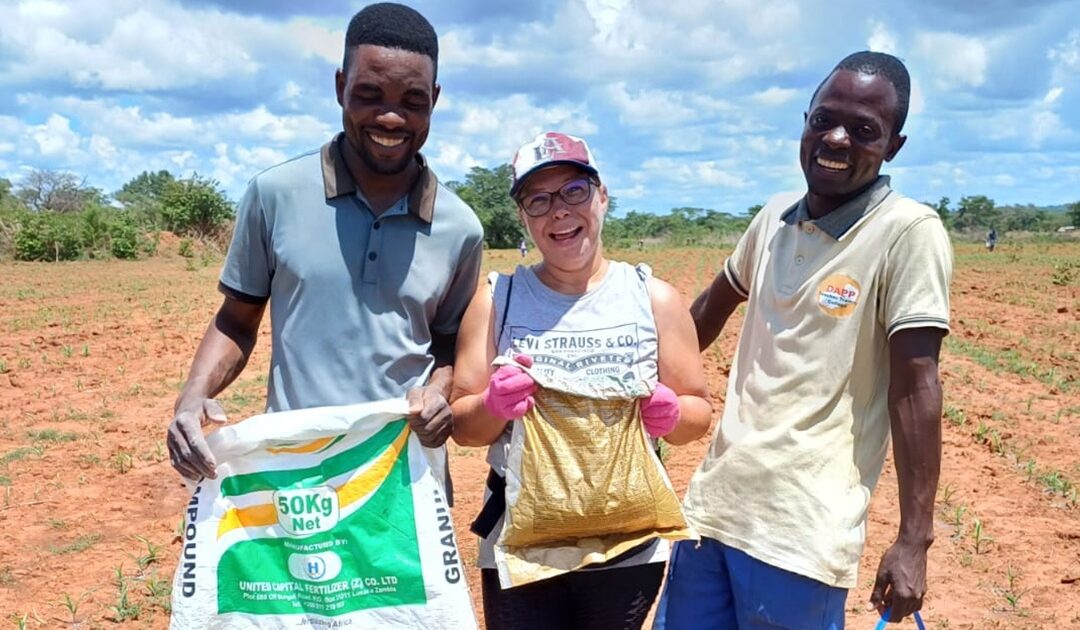
My name is Raquel Dávila, I am from Mexico and currently volunteering in Zambia as a Development Instructor (DI) with DAPP Zambia through CICD.
When I first arrived in Zambia, I did not fully understand how much impact second-hand clothes can have in a community. Many people only see clothes shops, but behind them there is something much bigger. DAPP shops help make clothing affordable for many families, but they also support community projects and create opportunities for people to earn an income and become more self-reliant.
Second hand clothes as a vehicle for change
One thing that has inspired me the most is seeing how many people survive and support their families through the buying and selling of second-hand clothes. Some people have small market stands, others sell door to door, and many young people use WhatsApp or Facebook to sell clothes to friends and customers.
I also learned that reselling is not only about selling clothes for money. In some communities, people even exchange clothes for maize and other basic needs. What may look like a simple shirt or pair of shoes can become food for a family, school money, or the beginning of a small business.


My role as a volunteer
My role in the project has mainly been to connect with the resellers and understand their reality. Through learning more about how the DAPP shops work and spending time with the resellers, I discovered that there is a very important field within the reselling community. The resellers are a big part of the DAPP economy, but I also realized they needed to be listened to in order to better understand their lives, their struggles, and their needs. That is how the idea was born for me to dedicate much of my work to them.
I spend time in the shops talking with them, visiting the places where they sell, listening to their stories, and learning how they work. Little by little, trust started growing, and this helped me organize small workshops where we talk about simple things like how to display clothes, better customer service, how to start small businesses with little money, how to keep simple records of their sales and expenses to better understand their profits, and how social media can help them sell more.


After spending three months working in Ndola, I later decided to expand my project to Lusaka, the capital city of Zambia. There, I started noticing the need many young girls and young people have to earn an income but often do not know where or how to begin. That is how the idea was born to guide them in creating a small income for themselves without leaving their studies. Many of them already have a smartphone, which can become a powerful tool to sell clothes through WhatsApp, Facebook, or within their own communities. Seeing their motivation and excitement has been one of the highlights of my project so far.
Working with the re-sellers
During this time, I have met many hardworking and resilient people.
I have met women who wake up very early every day to sell in markets, mothers supporting entire families through small businesses, and young people trying to build a better future for themselves. I have also built beautiful friendships with some of the resellers, who have opened not only the doors of their homes to me, but also their hearts.
Being welcomed in that way has inspired me even more every day and has made this experience deeply meaningful for me. Their strength, creativity, and gratitude have taught me a lot.


Challenges – and highlights
Of course, there have also been challenges. Sometimes language barriers and cultural differences make communication difficult. In the beginning, it was not always easy to know how I could contribute in a meaningful way. But slowly I learned that sometimes the most important thing is simply being present, listening, and building relationships with people.
This experience has taught me that development work is not only about projects or plans on paper. It is about human connection. It is about understanding people’s lives, respecting their experiences, and working together step by step.
I feel very grateful for the opportunity to be part of this project, and I hope the work we are doing can continue inspiring future teams and creating opportunities for more people in the communities.