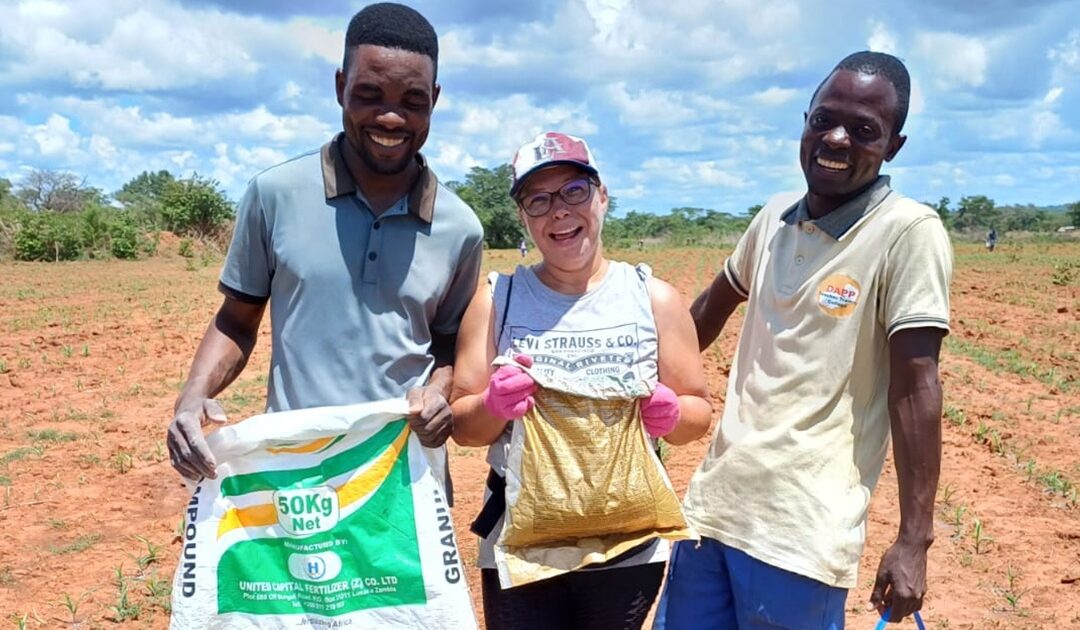
I’m Ale, a Development volunteer at DAPP Children’s Town in Zambia, which is one of the most beautiful experiences of my life.
Since January, I’ve been part of the Core-group Teachers at the Youth Academy.
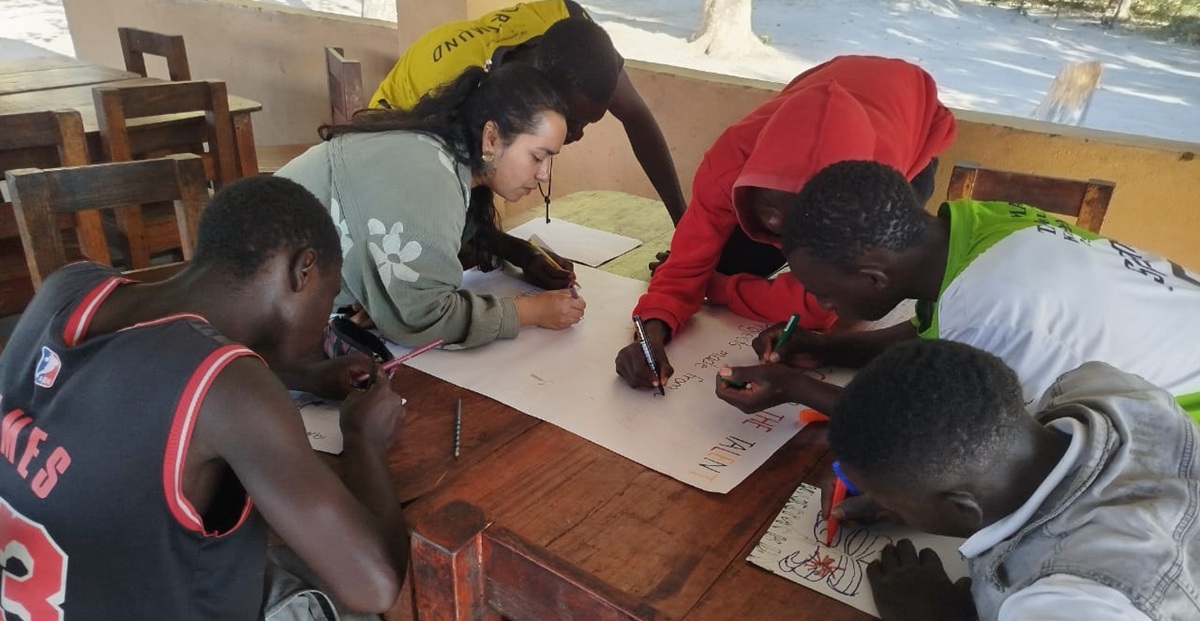
Here the main objective is to provide vocational training and rehabilitation for vulnerable youths, such as those who have lived on the streets, in orphanages, or who lack secure family support. As part of the team, I’ve taught numeracy and tailoring classes and participated in sports, cultural activities, dance, core group meetings and common action.
A new reality and a new perspective
It’s a busy project, but more rewarding than I could ever have imagined, especially because of the students with whom we have created spaces of affection, respect, and trust, finding a safe place to learn about their stories, their challenges, their pain, and their dreams. It is there, in these spaces where the boys themselves give you clues about what could be the best path for their own rehabilitation process, where I have been able to understand that each one is so different that their process should not be treated in a general way.
In these five months, my perspective has transformed in ways I never imagined. The concept of “help” with which I began this journey has changed, especially through the direct contact with reality. This has created a space for debate, confrontation, and questioning about the impact of each action as a volunteer and as a human being.


Good intentions don’t always constitute real help
I have particularly learned to accept that good intentions don’t always constitute real help for communities or individuals, and that shared actions and experiences have always been the best way to find the most timely solutions to the needs that arise daily in this context.
A key to managing this conflict has been to keep in mind the question: “Does this action contribute to the real development of the project I’m supporting, or is it just a one-off, disconnected action that serves my personal expectations?” I’ve realized that it’s not a question with a single answer and that it has more nuances than can be grasped and learned in six months of volunteering. I think it’s presumptuous to expect all our actions to have an impact with results in six months, in the long term, or in every aspect of the project, but I also see that choosing not to try or becoming paralyzed by needs and challenges is another form of passivity that doesn’t contribute to development.


Leading by example is one of the best ways
I’ve reaffirmed that leading by example is one of the best ways to teach and learn. The example of sharing, caring, and loving are seeds that don’t bloom overnight, but they leave a lasting mark on people and processes. For example, starting a volleyball game with three students and finishing it with more than fifteen, seeing second-year students become first-year teachers, or the simple fact that after fights over food, one of the strongest students shares his corn with more than ten boys – for me, that’s where true development begins.