Preparing to volunteer abroad, and the choice of CICD

Mar 21, 2026 | From the Gaia course, Students Experiences, Students Testimonials, Studies and preparations

By Valentina Bastioni, Italy / Volunteer for Change team February 2026

Hello! I am Valentina and I am Italian.it I have been living at CICD for four months and am part of the 10-month Volunteer for Change team. I graduated in Law last year, motivated by my passion for human rights since I was a child and by a secret dream: working in international cooperation.
I therefore decided to come to CICD because through the 10-month programme I have the opportunity to begin this journey and get closer to realities like those of African countries, where human rights are not always fully recognized, with the aim of contributing to their protection.

The Gaia Programme: hunting for sites!

During these months, I participated in the Gaia programme, a programme that allows students to join for about two and a half months within the College to raise a scholarship, thus helping to halve the course fees.
During this time, I was part of the “site find team”, helping to generate funds that allow the school to continue its work and support ongoing projects. Together with my team, I travelled to different parts of England looking for possible spots to place containers for collecting used clothes and shoes. These were intense and demanding months, but at the same time stimulating, engaging, and rewarding.

Skating in Hull
Skating in Hull
Valentina's Gaia team!

What I learned

I had the opportunity to visit numerous English cities, but above all, I developed skills that will be useful in my professional life and in my daily life. Organization and time management became essential. Every day, I interacted with the locals, improving my English level.

Not only that, I also learned to drive on the left side of the road – a truly amazing experience!

The challenges of the journey – a growth experience

Of course, it wasn’t always easy. It’s a very stimulating activity, but also full of challenges. It can often be frustrating and discouraging, especially at the beginning, when you don’t get answers or when new opportunities seem difficult to find. But with time, you learn to be patient and keep looking. Addressing these challenges is part of the learning process.
I’m very proud of the journey I’ve made and the skills I’ve developed so far. For me, this experience represents one of the most formative moments of my college journey: it allowed me to get to know my team better and collaborate with people from different cultures, allowing me to approach the next training period of the programme with greater awareness.

 

Latest Blog Post

The Hidden Side of “Help”: Why We Need to Rethink Development

The Hidden Side of “Help”: Why We Need to Rethink Development

We usually don’t think twice when we hear the word “aid.” Most of us assume that helping someone is always a good thing—after all, how could giving to the poor be wrong? But I’ve realized that there is a big difference between just being “charitable” and actually doing development in a way that changes lives forever.

I used to think that poverty was just a lack of money, but the truth is often about a lack of
access. For a long time, the traditional “aid industry” followed theories that didn’t really work on the ground.
A powerful example of this is the story of Muhammad Yunus. He met a woman who had to borrow less than a dollar from a moneylender just to survive, but the terms were so bad she was basically a slave. He realized that by giving just $27 out of his own pocket, he could free 42 people from that cycle. This wasn’t just “giving money”; it was proving that the poor—especially women—are trustworthy and “credit-worthy,” even without any collateral.
Another thing I never really considered is that real help doesn’t always need a big institution. In many places, people are creating their own “financial inclusion” without any banks. For example, in Mali, women form small groups to save their own money and lend it to each other. It only costs about $20 to train a member, and then the group can run itself for years.

This is so much better than just a “handout” because it builds social capital—the women gain confidence, learn to lead, and even start their own businesses.

Finally, we have to look at how governments help. In Brazil, a program called Bolsa Família has liftedd millions out of poverty, but it isn’t just a “free gift”. Families only get the support if they meet social requirements, like making sure their kids go to school and get vaccinated. This way, the help isn’t just a temporary fix; it’s an investment in the next generation.

The more I learned, the more I saw that the best kind of development is about empowering people to be their own driving force for change. It’s about building their capacities, so they don’t need “aid” anymore.

My Personal Turning Point I never used to think about the “aid industry” this way. I just thought help was help. But exploring these different models and seeing how much impact
“doing it right” can have has completely shifted my perspective. This is exactly why I wanted to create this article: to tell you about my favourite course and why it changed my mind. It was through these specific lessons that I truly understood how we can move beyond simple charity to real, sustainable change.

Thanks for reading, a. see you soon!

Clothes & shoes sales creating change in Zambia

Clothes & shoes sales creating change in Zambia

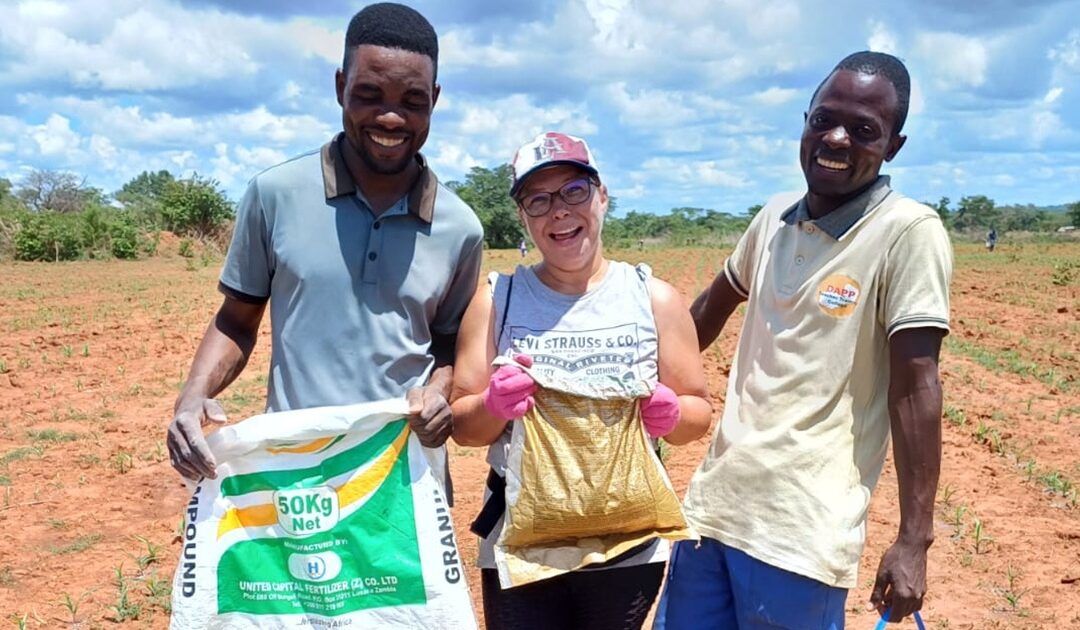
My name is Raquel Dávila, I am from Mexico and currently volunteering in Zambia as a Development Instructor (DI) with DAPP Zambia through CICD. When I first arrived in Zambia, I did not fully understand how much impact second-hand clothes can have in a community. Many...