By Melisa Carrara, Poverty Activist team February 2025
My name is Melisa, and I decided to join CICD because I was looking for more than just academic knowledge. As an agronomy engineer, I wanted to understand how agriculture, development, and community work come together in real life. CICD offered exactly that: a programme that combines theory, practical experience, and personal development, with a strong focus on global challenges such as food security and climate change.
From studies and preparation in UK ….
Before coming to Africa, I spent five months at CICD preparing for the project. During this time, I learned not only about development theory, but also about teamwork, leadership, and working in multicultural environments. We studied topics such as global inequality, sustainability, project work, and communication. We also lived and worked together as a group, which helped me understand the importance of cooperation, conflict management, and responsibility. Many of these experiences were very useful once I arrived in Zambia, especially when working with communities where patience, listening, and flexibility are essential.


…. to the new reality in Zambia
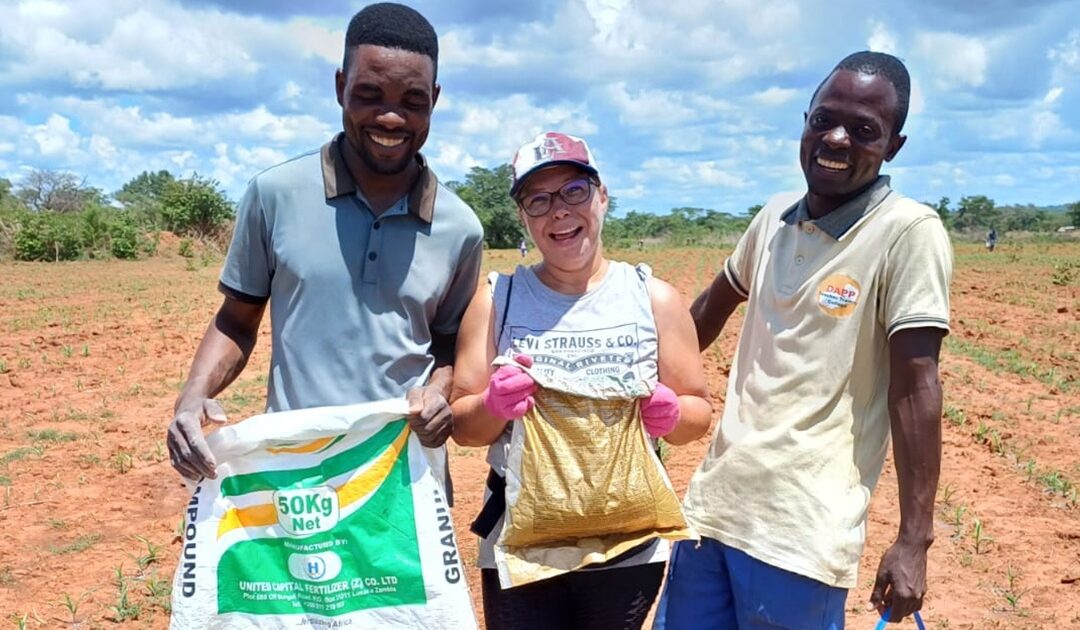
After the training period, I was placed in Zambia with DAPP, working in the Young Farmers Club project. The main aim of this project is to support small-scale farmers by strengthening their agricultural skills, organization, and self-reliance. Through practical farming, saving groups, and cooperative structures, the project helps farmers improve food security and build more sustainable livelihoods.
My role in the project
I was there to assist as a Development Instructor. I worked mainly in the Model Garden together with two local team leaders. This garden is not only a place to grow food, but also a demonstration and training space for conservation agriculture. My daily work included crop monitoring, soil management, composting, mulching, irrigation systems, and planning crop rotation and association.
We also increased the diversity of crops significantly and worked towards making the garden economically self-sustaining through the sale of produce.
Beyond the garden, I supported farmer groups with saving money systems and cooperative registration. These activities are very important because they help farmers access resources, organize themselves, and become more resilient in the face of climate change and economic challenges.


Learning moments – how to create impact
The six months in Zambia were full of learning moments. One of the biggest challenges was dealing with communication and leadership issues within some groups. Meetings were not always well attended, and progress could be slow. At the same time, this taught me a lot about working with people, respecting local rhythms, and understanding that development is a process, not a quick result. A major highlight was seeing the Model Garden grow from a small, limited space into a diverse and productive system, and seeing how farmers felt proud of what they achieved together.
This experience has had a strong impact on how I see my future. I now feel more confident working in international and community-based projects, especially those connected to sustainable agriculture, food security, and environmental protection.
I have learned that technical knowledge is important, but it only creates impact when it is combined with human connection and local ownership


My advice to you!
For anyone considering joining the CICD programme, my advice would be: come with an open mind, be ready to learn from others, and do not be afraid of challenges.
The experience will push you out of your comfort zone, but it will also give you tools, skills, and perspectives that are very difficult to gain elsewhere.