By Antonio Fragale, Volunteer for Change team October 2025

I’m Antonio, and I’m from Italy. I chose to join the Gaia program at CICD because I wanted an opportunity to raise a scholarship that will allow me to travel to Africa with the 10-month program starting in October.

My Start in Promotion

During the Gaia programme we take care of different responsibility areas 4 ½ days per week. as well as studies 1 ½ day per week.
My first responsibility area in the Gaia team was in the Promotion office. My task was to promote the college’s activities and programs on Italian social media and help respond to inquiries from interested people via messages, emails, and video calls.
This experience was incredibly formative—both in terms of the skills I gained (like how to effectively communicate the college’s spirit and activities on social media) and on a more personal level. The atmosphere in the office and, most of all, the stories of the people interested in embarking on the same journey as me truly enriched and motivated me.

Walking or bicycling is mostly how you get around
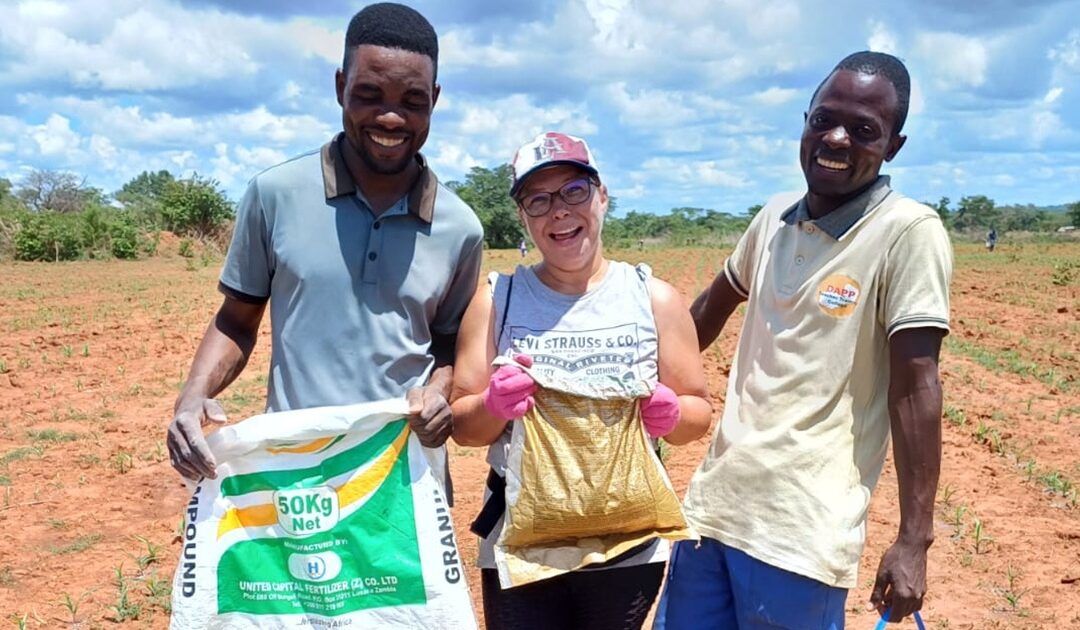
Helping with vegetable production is part of life at CICD

Moving to Container Maintenance

After my time in Promotion, I moved on to another activity involving the Gaia team: container maintenance. One of the college’s main activities is collecting used clothing, which requires containers that need regular upkeep.
This was a completely new experience for me. I’ve never worked in a practical, hands-on environment before, so it was initially very challenging to get used to the pace and methods of the work, given my lack of technical experience. Day by day, though, I’m trying to learn better working techniques and enrich my practical skills. I’m sure these will be very useful to me in the future, even outside of this context.

Growth and Challenges

I am very proud of my journey so far. I’m learning a lot about myself and how to deal with a host of situations common to anyone who chooses to be part of an environment where sharing and community are the norm.
Of course, there are difficulties, just like in any environment, but those are the things that help us grow. I came here to grow and to challenge myself.



Latest Blog Post

The Hidden Side of “Help”: Why We Need to Rethink Development

The Hidden Side of “Help”: Why We Need to Rethink Development

We usually don’t think twice when we hear the word “aid.” Most of us assume that helping someone is always a good thing—after all, how could giving to the poor be wrong? But I’ve realized that there is a big difference between just being “charitable” and actually doing development in a way that changes lives forever.

I used to think that poverty was just a lack of money, but the truth is often about a lack of
access. For a long time, the traditional “aid industry” followed theories that didn’t really work on the ground.
A powerful example of this is the story of Muhammad Yunus. He met a woman who had to borrow less than a dollar from a moneylender just to survive, but the terms were so bad she was basically a slave. He realized that by giving just $27 out of his own pocket, he could free 42 people from that cycle. This wasn’t just “giving money”; it was proving that the poor—especially women—are trustworthy and “credit-worthy,” even without any collateral.
Another thing I never really considered is that real help doesn’t always need a big institution. In many places, people are creating their own “financial inclusion” without any banks. For example, in Mali, women form small groups to save their own money and lend it to each other. It only costs about $20 to train a member, and then the group can run itself for years.

This is so much better than just a “handout” because it builds social capital—the women gain confidence, learn to lead, and even start their own businesses.

Finally, we have to look at how governments help. In Brazil, a program called Bolsa Família has liftedd millions out of poverty, but it isn’t just a “free gift”. Families only get the support if they meet social requirements, like making sure their kids go to school and get vaccinated. This way, the help isn’t just a temporary fix; it’s an investment in the next generation.

The more I learned, the more I saw that the best kind of development is about empowering people to be their own driving force for change. It’s about building their capacities, so they don’t need “aid” anymore.

My Personal Turning Point I never used to think about the “aid industry” this way. I just thought help was help. But exploring these different models and seeing how much impact
“doing it right” can have has completely shifted my perspective. This is exactly why I wanted to create this article: to tell you about my favourite course and why it changed my mind. It was through these specific lessons that I truly understood how we can move beyond simple charity to real, sustainable change.

Thanks for reading, a. see you soon!

Clothes & shoes sales creating change in Zambia

Clothes & shoes sales creating change in Zambia

My name is Raquel Dávila, I am from Mexico and currently volunteering in Zambia as a Development Instructor (DI) with DAPP Zambia through CICD. When I first arrived in Zambia, I did not fully understand how much impact second-hand clothes can have in a community. Many...