Why become a Climate Activist?

Jun 1, 2025 | Important Subjects

Why become a Climate Activist?

Imagine yourself at home watching TV…
……..and following the news about the world. You are hearing about record-breaking heat waves in countries like Spain, the United States, and India.

Severe and prolonged droughts in many African countries, and Brazil, for example. That’s not all, though! You also hear about accelerated polar ice melt, species extinction, and coral bleaching caused by ocean warming.
Everything looks so frightening that you might feel uncomfortable given the situation. You want to do something, but you do not know exactly what you can do or where to begin.

You start to think and search, and some of your questions are “What can I do?” “How can I help?” and one of your answers is “to become a Climate Activist is the first step.”

Now you are wondering, “Why should I become a climate activist?” It’s a good question, and we’re here to help you and provide compelling reasons to join us in this peaceful fight for the well-being of our planet and lives.

Organic food production for the future
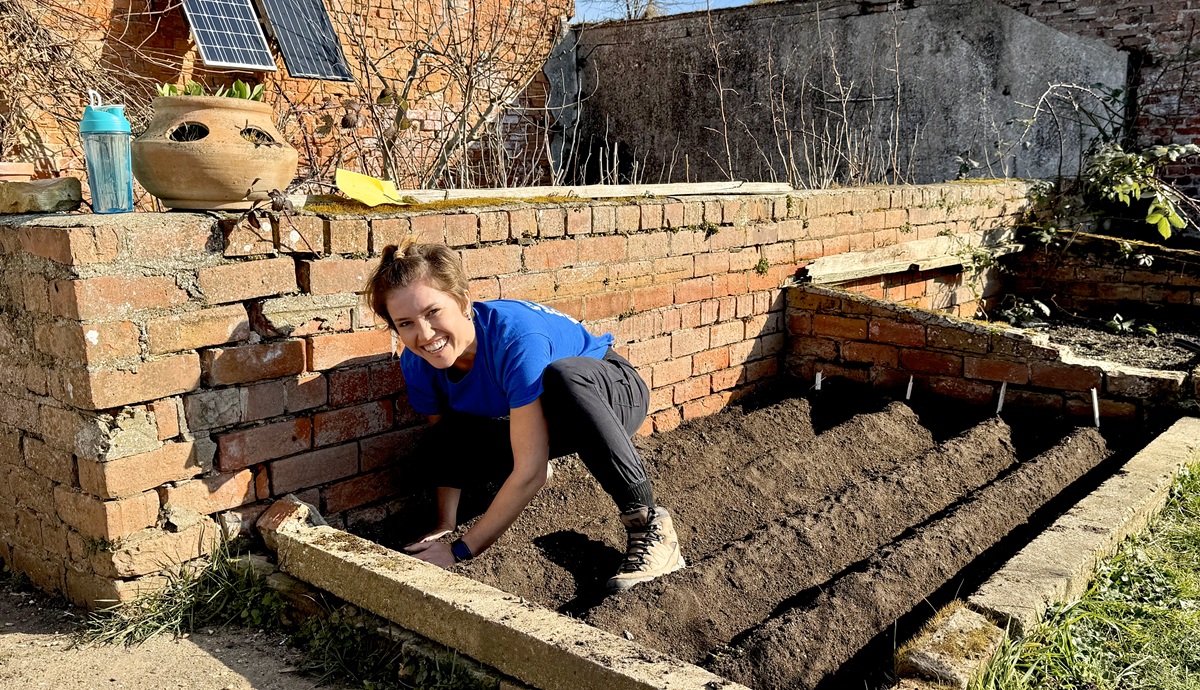
Garden team at CICD in fighting mode!

1. Take action
A good reason to become a Climate Activist: taking action is the first step, even the small ones like recycling or cultivating your organic garden.

2. Learn how to help
We are in a constant progress, we do not know everything and education is part of this process. Becoming a Climate Activist is also learning all the time, about what we can do and how we can help our envirolnment.

3. Support local communities
You learn and then you are able to teach, our neighbours and communities need our help and support. Remember: do not underestimate small actions, they multiply and can have huge impact.

4. Spread awareness
Talk with family, friends or people you meet, discuss the climate crisis and how we can act in our daily life to mitigate. Show them examples of actions and give information to spread awareness.

We have many other reasons that we are keen to share with you, and we would like to do this here at CICD. We have a special 7-month programme for Climate Activists!

It consists of: 3 months studying here at CICD in England, living a community life with people from many parts of the world. Developing many skills like teamwork, leadership, and sense of community. After that, 3 months volunteering in the Caribbean, experiencing Caribbean life in Saint Vincent and the Grenadines, taking action, and helping the communities. Afterwards, 1 month at CICD to conclude on your programme and share your experiences.

Are you ready for new changes in your life? Welcome to CICD!!

By Edson Eduardo, Brazil

Latest Blog Post

The Hidden Side of “Help”: Why We Need to Rethink Development

The Hidden Side of “Help”: Why We Need to Rethink Development

We usually don’t think twice when we hear the word “aid.” Most of us assume that helping someone is always a good thing—after all, how could giving to the poor be wrong? But I’ve realized that there is a big difference between just being “charitable” and actually doing development in a way that changes lives forever.

I used to think that poverty was just a lack of money, but the truth is often about a lack of
access. For a long time, the traditional “aid industry” followed theories that didn’t really work on the ground.
A powerful example of this is the story of Muhammad Yunus. He met a woman who had to borrow less than a dollar from a moneylender just to survive, but the terms were so bad she was basically a slave. He realized that by giving just $27 out of his own pocket, he could free 42 people from that cycle. This wasn’t just “giving money”; it was proving that the poor—especially women—are trustworthy and “credit-worthy,” even without any collateral.
Another thing I never really considered is that real help doesn’t always need a big institution. In many places, people are creating their own “financial inclusion” without any banks. For example, in Mali, women form small groups to save their own money and lend it to each other. It only costs about $20 to train a member, and then the group can run itself for years.

This is so much better than just a “handout” because it builds social capital—the women gain confidence, learn to lead, and even start their own businesses.

Finally, we have to look at how governments help. In Brazil, a program called Bolsa Família has liftedd millions out of poverty, but it isn’t just a “free gift”. Families only get the support if they meet social requirements, like making sure their kids go to school and get vaccinated. This way, the help isn’t just a temporary fix; it’s an investment in the next generation.

The more I learned, the more I saw that the best kind of development is about empowering people to be their own driving force for change. It’s about building their capacities, so they don’t need “aid” anymore.

My Personal Turning Point I never used to think about the “aid industry” this way. I just thought help was help. But exploring these different models and seeing how much impact
“doing it right” can have has completely shifted my perspective. This is exactly why I wanted to create this article: to tell you about my favourite course and why it changed my mind. It was through these specific lessons that I truly understood how we can move beyond simple charity to real, sustainable change.

Thanks for reading, a. see you soon!

Clothes & shoes sales creating change in Zambia

Clothes & shoes sales creating change in Zambia

My name is Raquel Dávila, I am from Mexico and currently volunteering in Zambia as a Development Instructor (DI) with DAPP Zambia through CICD. When I first arrived in Zambia, I did not fully understand how much impact second-hand clothes can have in a community. Many...