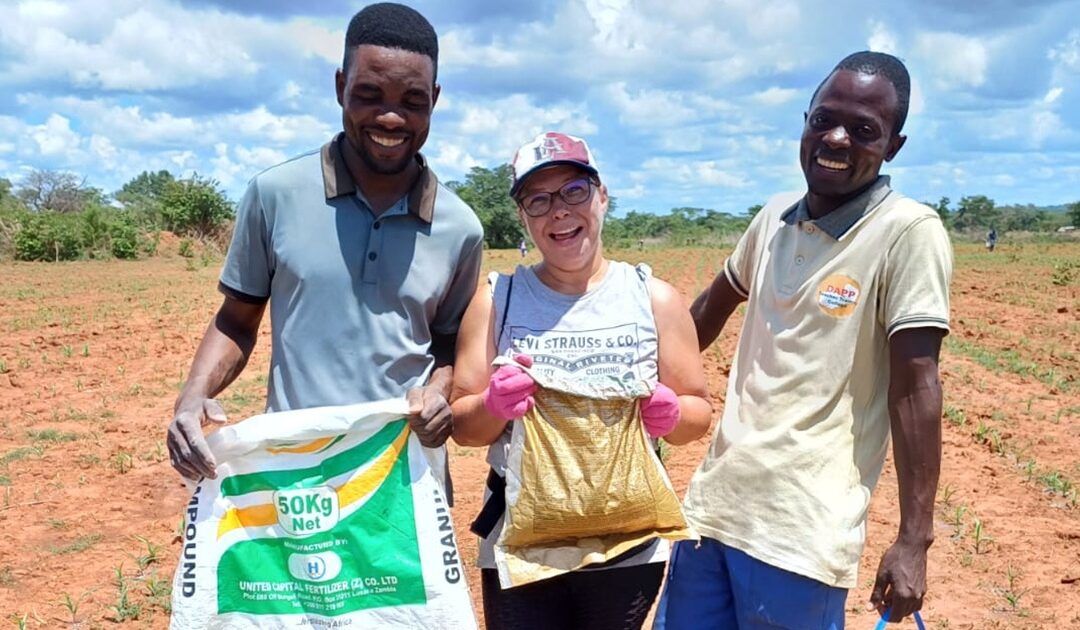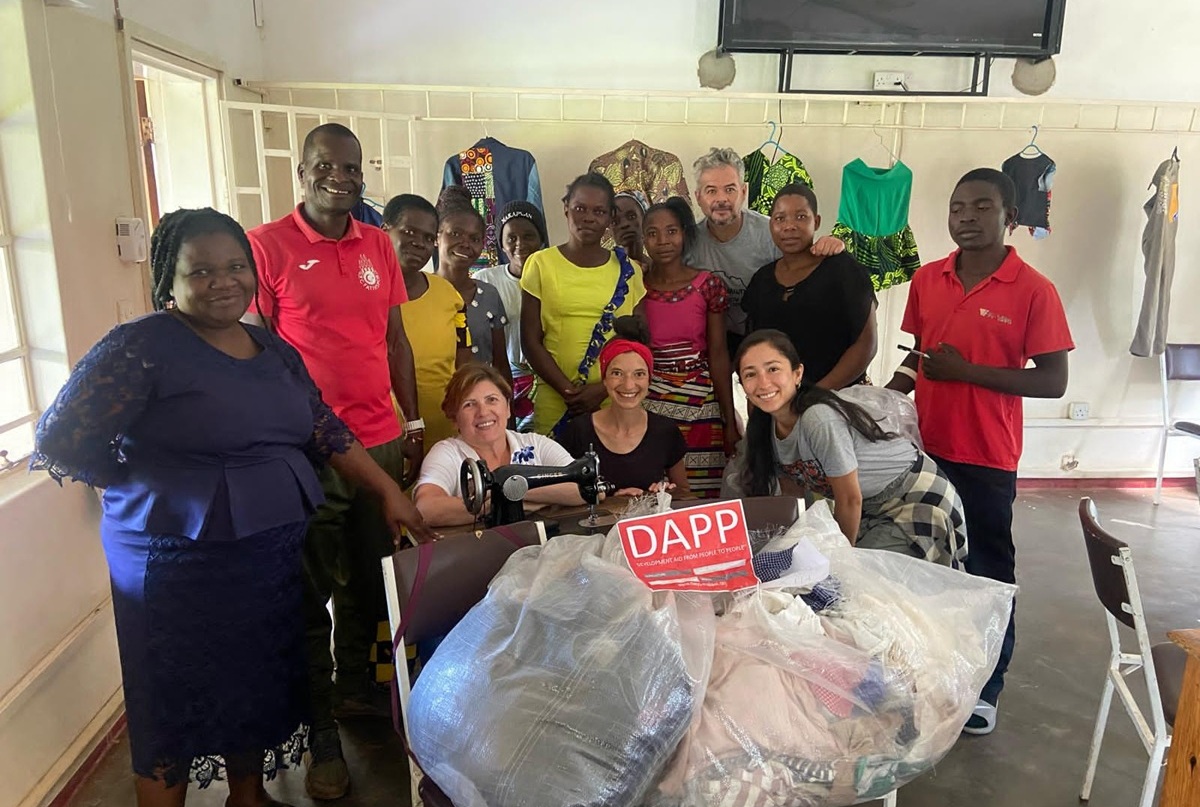
Franz with DAPP staff and Kumanda Village Tailoring group
Time well invested volunteering in the warm heart of Africa
I’ve always had a deep concern about time. It’s the one thing you can’t earn back, can’t buy more of, and shouldn’t waste. So when I decided to hit pause on my professional life in Colombia (I was working all over the country between private and public sector) it wasn’t just for a change of scenery. I wasn’t looking for a break. (even if I was sick and tired of being disappointed and frustrated with politics) I was looking to contribute, to engage, and to ensure that whatever came next felt meaningful.
Preparing for a role as collaborator and learner
Before setting foot in Malawi, I went through an intensive pre-departure training period when I join CICD program in the UK. The training focused on equipping us with tools for cultural sensitivity, create awareness about what we can face there, contents regarding historical and community development principles, and the fundamentals for rural African settings. It wasn’t just logistical preparation— it was a mindset shift. We learned to approach our roles not as saviors or experts, but as collaborators and learners.
Interestingly, one of the most challenging moments came before I even arrived. I was told I wasn’t ready to go — and at the time, I disagreed. I felt prepared, eager, and equipped. But being on the ground in Malawi taught me a humbling truth: you never really get ready for what you’ll face there. The real challenges — cultural shock, health issues, time management under completely new conditions — only become visible when you’re in the middle of them.
I faced a range of unexpected health setbacks, struggled at times to balance time and responsibilities, and had to navigate moments of cultural dissonance that challenged my assumptions. But through time, care, and an open disposition — and most importantly, with the steady support of my Malawian teammates and colleagues from all over the world — I managed to adapt and grow. These experiences didn’t just help me stay and serve more effectively; they left me with lasting lessons I’ve taken into every aspect of my life since.
Arriving to Malawi
Enter: Malawi mode. A place I’d never been, and yet somehow, it became exactly where I needed to be.
My main role in Malawi was as Pre School supervisor supporter as Development Instructor. This included working closely with local preschools to improve their learning environments, developing tools to support monitoring and evaluation of educational outcomes, facilitating bridges between DAPP and the communities, workshops, pedagogical tools and helping generate sustainable income initiatives — like the tailoring upcycling project — were the main tasks request.. Our aim was to strengthen local capacity and build long-term systems that would outlast our time on the ground.
Before arriving, I pictured myself applying everything I knew about humanitarian work — early childhood development, community impact, project design. I packed my mental toolbox, ready to help solve problems, support preschool education, and “be part of the change they need.” You know, the classic well-intentioned volunteer mindset. I thought I was going to teach, to offer, to do. And then Malawi — with its calm wisdom and warm humanity — handed me a lesson I didn’t expect: it’s not about you. That’s not something to show off. It’s a fact.


Volunteering is about showing up fully
Volunteering, I came to understand, isn’t about “giving” in the traditional sense. It’s about showing up fully — with your hands, your heart, your presence — and becoming part of something bigger than yourself. It’s about understanding that your ego, your professional identity, even your carefully laid plans, might not matter in the way you think. What matters is that you’re there — listening, learning, adapting. And by overcoming the challenges proper of a total different environment like Malawi, I become part of what we named “The wisdom team” by knowing that we are wiser together, and stronger when we are able to share, learn and adapt. So that’s how we get things done:
1. We created a digital tracking system for supervising the preschools,— something now used by incoming volunteers and DAPP local teams to track progress, make decisions, and follow up of the work that needs to be done and maintain continuity.
2. We developed a community engagement strategy to bring caregivers, (teachers), and village leaders into closer alignment by a common agreement Early Childhood Development has to be a priority and it is the best investment that community can have for their own benefit.
3. We launched an upcycling tailoring workshop, now running with the support of DAPP Chilangoma — a project that supports local women, generates income, and links directly to preschool sustainability.
We even aligned all our work with Malawi Vision 2063 “An Inclusively Wealthy and Self-reliant Nation”— the country’s bold national development plan. Because yes, volunteering can be emotional, but it should also be strategic.
My biggest takeaways: the dance circles
Dancing turned out to be the ultimate door-opener. There’s something universal in rhythm — something that cuts through language, culture, and awkward introductions. I’d find myself in the middle of a community gathering, moving with people whose stories I couldn’t fully understand — and yet we connected. Through movement, eye contact, laughter. In those moments, I stopped being “the foreign volunteer” and just became Franz. Another human being in the circle.
That, right there, was the real connection.
It wasn’t always easy. Some days were chaotic, emotionally draining, or just plain confusing. But the ups and downs? They were necessary. Like any good process, you can’t reach the outcome without some friction. And the outcome, for me, wasn’t just a finished report or a new workshop. It was this deep, steady sense of gratitude — not just for what I experienced, but for how it changed me.
Bringing it to the public
Now, the experience isn’t really over. There’s still the part where I share it — this part — BRING IT TO THE PUBLIC, helping people understand what this kind of work actually means. I’ve decided to give myself some space. “A bit of a European summer” cause I still thing that I need some time to process it all — because while I didn’t come to Malawi looking for “therapy”, that’s exactly what it offered in its own quiet, deep, reflexive, unexpected way.
And of course, there are the people. The friends I made — from all over the world (my beloved Greek, Argentinian, British, Norway, Italian and Colombians colleges) and the local people right there in Malawi — taught me more than any training ever could. Most of the real learning happened in the off-hours, the side conversations, the unplanned moments. Those connections, that warmth… now I know what they mean when they call Malawi “The Warm Heart of Africa.”
I left Malawi, technically. But truth be told, Malawi hasn’t left me — and I hope it never does.
By Franz Rodriguez Gualdrón, Colombia/ Volunteer for Change team July 2024