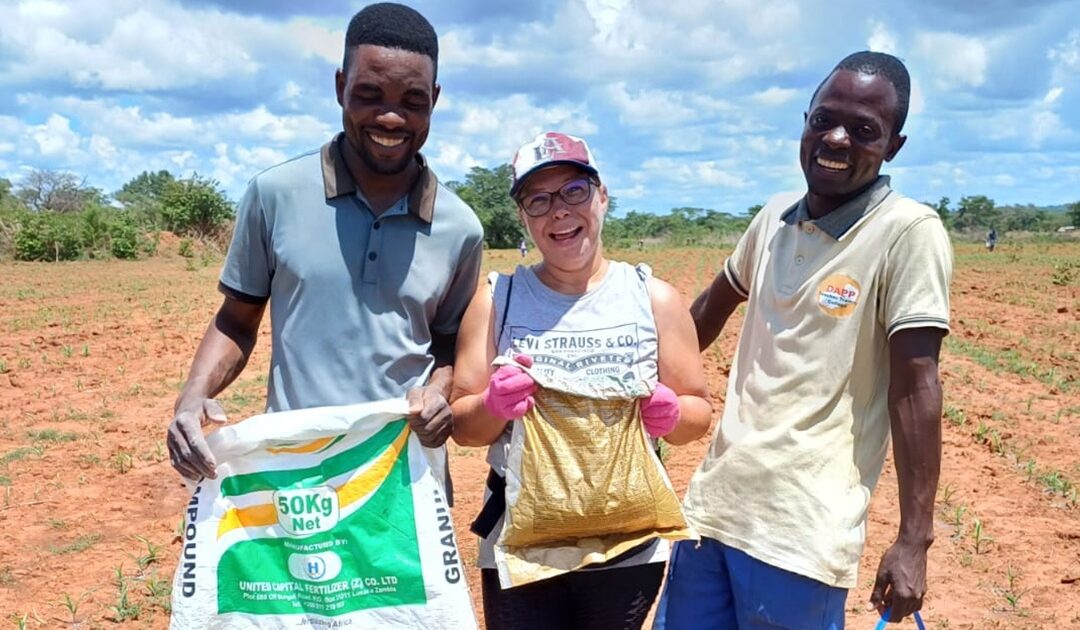
By Jeanette Fall, Poverty Activist team February 2023
My name is Jeanette. I’m 45 years old economist. I have worked in the finance department all in my life, in various positions during the last 20 years…so I could try to do almost everything possible there. I am also the proud mother of two grown boys whom I raised alone.
In August 2022, I made a big decision – that is after the fact I can say it was a very good one – and joined the CICD 6+12-month program. What did this mean in my case? 6 months Gaia period, 5 months DI learning period, 6 months project in Africa / India and then a closing one month – Bringing it to the public… which I am just finishing.
Studies and preparations at CICD
In the first two chapters of the program – Gaia and DI period – I was still out of my comfort zone…but it was much more better, than before, because it happened in an another country. I had to live “together” with many new and different people in a “community lifestyle”, what I have never done in my life before. During this period, I learned a lot about my limits and myself. What I can tolerate…what I cannot…and what I do not want at all. It was a very interesting, useful and deep self-knowledge training for me with full of changing feelings. Overall, I can say it was a very nice period. Luck followed my path…I always could find a way to be happy with the given situation, with the thing I had to do… be it work or study. I think that is very important in real life too. I have always known this, but I had to leave the country where I had to live so far, that country which was troubling me a lot and completely destroyed me, in order to be able to put this knowledge into practice.
During my Gaia period, I was a site finder driver. I found my joy in driving and in the wonderful landscapes and nature of England. During my DI period, when we had to spend a lot of time in our classroom with learning new and interesting things about the former and present world…I started to take a walk…several kilometres every day, outside, around the school area. This made my everyday life more varied, healthy and happy in the same way. Then, finally came the long-awaited moment of my life that I had been working very hard for a year: half a year in Africa, in my sweet home. I can finally spend a longer period in my real comfort zone, where I can sleep and feel myself in safe. This was my main reason why I joined the CICD’s program.
6 wonderful months with DAPP Zambia
My destination country was Zambia. I could spend half year at DAPP Mkushi College of Education. It is a private Teacher Training College run by Development Aid from People to People (DAPP Zambia) – in association with The University of Zambia – recommend Primary Teachers’ Diploma in three academic years. This is one of the cheapest private higher education opportunity in Zambia with its very inclusive and innovative education strategy and original, creatively shaped program to train “Another kind of Teachers” especially for rural areas. This boarding Teacher Training College would like to reduce the gap between rural and urban schools and improving the quality of education in rural primary schools.
In my opinion, this is one of the most useful DAPP’s project in Zambia, because education is one of the most important tools for development. I am very glad to have been a part of it, even if only for half a year.
My main job was to support the work of the main administration – president and vice president of the college – and teachers. I also helped the students’ activities and their daily administration. I enjoyed every second of it. It was a new and even deeper phase of my self-awareness training. I realized that the real problem of my life is not me – as I thought before –, only the place where I had to live. The practice confirmed what I already knew, that my comfort zone is Africa, which is my sweet home.
Being there did not change me, but it gave me my life and health back. That is the best thing that could happened with me and I never want to lose it again. For this reason, I am very grateful to CICD for giving me the opportunity to join this great program.
I was finally in a place where I could feel myself at home, comfortable and in safe with the environment and with the people around me. We could understand each other very easily. Because of this reasons, I was able to solve all my tasks quickly and in a very good and creative way. I was always full with energy and new ideas. I loved working with people to achieve our common goal. With my work attitude, I could inspire and motivate them on a daily basis. I had to realize that when I am in the right place of the world, I am much more effective, useful and can do almost anything. In the first time in my life, I loved my job and my life.
Next to my college work, we – me and my duo partner from our DI group – also tried to continue a community development project which was started by the previous DI trio from CICD. This was the construction of two dormitories for the nearby combined school. The aim of this project is to provide a better and more livable life for rural students. In rural areas youghts use to live far away from their school. This often causes 20-30 kilometers daily walk for them. Often they don’t even come to school beacuse of this, which make to fall behind in their studies. We would like to improve this situation.
In connection with this, I would like to suggest and advise something for future DIs. If you are planning to start an independent, new project during your half-year periods in Africa / India, make sure that you made a thoughtful and careful decision. Don’t start anything without fully covered financial funds and something what you can’t finish during your stay. You make everyone’s life easier with this…
The six months I spent in Africa did not cause any difficulties for me, as I could finally live in my comfort zone. The biggest challenge for me was returning to Europe…I have been struggling with this ever since. Arriving back to England, to CICD college, I started the last chapter of my program, the last month, which is called “Bringing to the public”.
What did I learn from CICD and Zambia?
For me, this meant summarizing what happened during my half year in Zambia and putting it into a nice and enjoyable presentation form. What we first shared here in CICD college, then traveled to Denmark for a week. There we also presented it in many places with interested parties. Now back from Denmark, I’m spending my last week here at the college. I have to prepare my final report during this time and we will have a graduation ceremony. After thanking CICD for this great opportunity, I return to my children, who are already waiting for me very much.
What did I learned during this one and half year? You should always have a goal…a dream that you want to achieve…for that you have to work very hard…and never give up…but if you do like this…everything is possible…and you will be very happy in the end…or during your whole “journey” too…