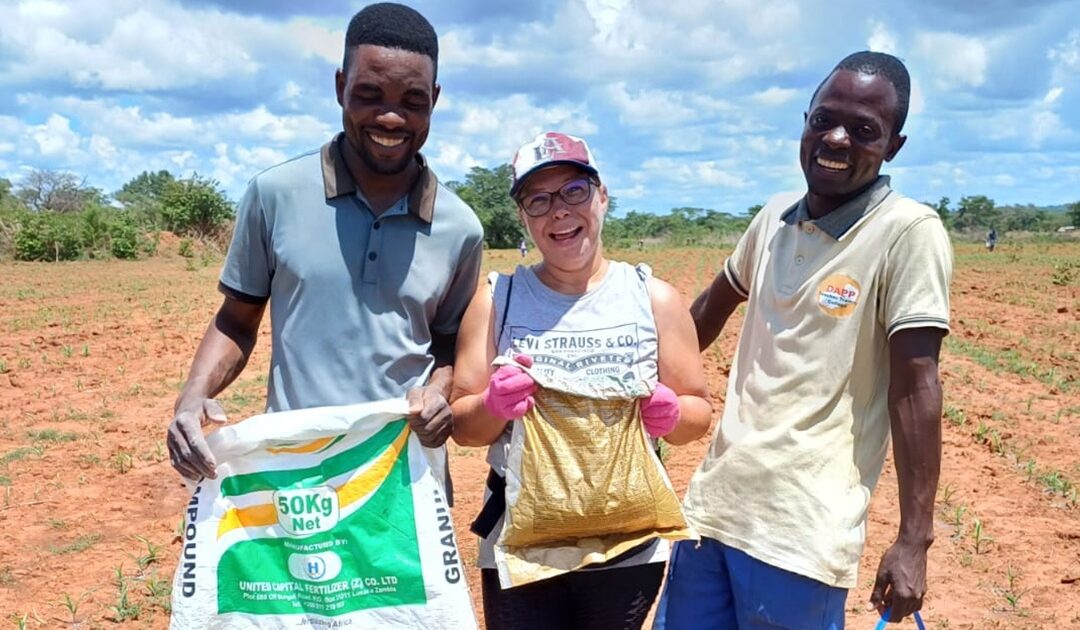
The Teamwork – my experience in the Gaia Team
My name is Pamela Degele and I have been part of the Gaia team of CICD since February 2022, with the goal to raise the scholarship for my 12-month Poverty Activist programme. During this time, I have integrated in two main activities. The first one is in the area of promotion, where I mainly develop my volunteer activity. In this office my task is to attract and advise people from different countries about the school. Between three and four colleagues we discuss the most effective way to spread and communicate the objectives and programmes of the college.
The second one is my study team, four people with whom we will share not only this stage of volunteering but also the five months of training and subsequent work in Africa. Along with them, in our study hours, we address different topics of contemporary interest such as organic agriculture, genocides and development projects. In addition, we aim to maintain a common economy, so our individual results during our Gaia period will be integrated and used to cover the costs of our future programmes.
So, what does teamwork mean to me?
This has been one of the biggest lessons and challenges I have had in CICD so far. It should be noted that my main career and occupation is scientific research, which implies ambitious, highly productive and largely solitary work. In this sense, I was used to making decisions unilaterally or with people of great affinity, which allowed me to act quickly, moving in a clear direction and achieving objectives efficiently.
Teamwork has many advantages, but simplicity is surely not one of them. First of all, it involves exercising patience. Each person has different rhythms of thought and work, simpler or more complex ways of approaching reality, divergent opinions. Here at CICD, this is especially noticeable since the groups are very heterogeneous: in a single team we bring together people from different countries, languages, education, experience and age. I had to learn to stop running and look at my teammates, listen to them and get to know them. Learn to wait. Understand that even if reaching a goal in this way may seem slower, the learning you gain in the process is worth it. It may even be more important than the result itself.
To be honest, to get this knowledge cost me a great deal of frustration and moodiness. But then I discovered that if I take a position of humility and attention, I can learn a lot from others. Sometimes it is just as productive to stay chatting after dinner as it is to run to my room to study something alone.
Sharing responsibilities and finding solutions
The latest finding was hand in hand with another: just as the achievements obtained are not mine but everyone’s, when we do not meet an objective or do not do it on time, it is not my exclusive responsibility. In this sense, working with others meant for me to discover a sense of greater tranquility: shared responsibility weighs much less.Teamwork has been very important for me also on a personal level. If I’m going through a difficult situation, had an argument with someone or something I don’t agree with is affecting me, I can sit down with them and share it. In this way, we will find a solution together.
Being a team is precisely that: what affects one affects everyone. In this sense we have to find a way to support ourselves, help each other and be well, so that not only our work progresses, but we can also enjoy doing it. For this I had to develop the skill of communication. It’s means learn to say what I think and feel in an assertive way, trusting that what is happening to me is of interest for the others. After so many years of carrying sadness and joy alone, I have to say that sharing is terribly soothing.
A new way of thinking
Teamwork is an apprenticeship that has just begun, but it has helped me to exercise a new way of relating and working. Since the system in which we live teaches us from a young age to think individualistically and to be responsible of everything that happens on our life, working as a team is a great relief and at the same time great motivation. As we are different, we have the chance of exploring results that perhaps you on your own would not have been able to achieve or even imagine.
There is a proverb that here in CICD people like very much: “If you want to go fast, go alone; but if you want to go far, go together”. Now I’m able to better understand the meaning of it.