Luis Fraga Brum, Portugal

Nov 23, 2021 | Students Testimonials

Luis-Fraga-Brum-banner.jpg

My name is Luis, I’m from Portugal and I live in Sunderland UK.

I work as Clothes Collection Driver in CICD in Durham, where I find the purpose of contributing to reducing the imbalance caused by climate change.
As I use to say, every donation of a bag of clothes that I put into the van makes me feel that I contribute to a better society, cutting down less trees, contributing to cleaning, giving a second life to many of these clothes and the opportunity to those most disadvantaged people of obtaining certain low price items of second-hand clothing, which new they could not buy.

In terms of Education and career, at the beginning while I was studying in the high school I worked as a waiter, where I learned a lot about the humbleness of serving other people, in cafes and restaurants. Later, I started to study Accounting and Management, which gave me a lot of knowledge of the entire dynamics of the internal workings of an organisation.
With the help of a professional advisor, I completed a Topography course and worked in the area for a year, which allowed me to get very close to nature, which made me want to become a Development Activist. Researching several possibilities, I ended up asking a friend who was doing a DNS Project at Tvind School in Denmark. Through the Tvind School web page I accessed the CICD web page and became interested. But before deciding about CICD, I went to live in Glasgow in Scotland.
In Glasgow I worked in a hotel and at the same time studied Three-dimensional Design. Then I returned to Portugal where I participated in the Portuguese Sign Language Interpreter course. I also developed studies of spiritual development, specifically Buddhism on my own. I even tried study Mechanical Engineering and worked as a truck driver and that allowed me to know other countries in the world.

A new step!

Finally, in 2015, I decided to join “Fighting with the Poor” to volunteer in a Mozambique project through CICD UK. When I took that step, I felt all my knowledge could be applied in the Mozambique project.
At CICD UK I had a great experience of working and living in a community as a way of life. In Mozambique I reached successful results helping in many tasks within the “Agricultures Club” and on the other hand, I created my own vegetable garden. Also, at the request of students, I was an English tutor and I created a Taxi-bicycles’ micro-company.
I recommend this project to everyone who want to develop relationships and help others to have opportunities.

I believe when people are deprived of minimal survival conditions, and the opportunities are drastically reduced, this makes the development of society more difficult. So challenge yourself and give it a try.

Latest Blog Post

The Hidden Side of “Help”: Why We Need to Rethink Development

The Hidden Side of “Help”: Why We Need to Rethink Development

We usually don’t think twice when we hear the word “aid.” Most of us assume that helping someone is always a good thing—after all, how could giving to the poor be wrong? But I’ve realized that there is a big difference between just being “charitable” and actually doing development in a way that changes lives forever.

I used to think that poverty was just a lack of money, but the truth is often about a lack of
access. For a long time, the traditional “aid industry” followed theories that didn’t really work on the ground.
A powerful example of this is the story of Muhammad Yunus. He met a woman who had to borrow less than a dollar from a moneylender just to survive, but the terms were so bad she was basically a slave. He realized that by giving just $27 out of his own pocket, he could free 42 people from that cycle. This wasn’t just “giving money”; it was proving that the poor—especially women—are trustworthy and “credit-worthy,” even without any collateral.
Another thing I never really considered is that real help doesn’t always need a big institution. In many places, people are creating their own “financial inclusion” without any banks. For example, in Mali, women form small groups to save their own money and lend it to each other. It only costs about $20 to train a member, and then the group can run itself for years.

This is so much better than just a “handout” because it builds social capital—the women gain confidence, learn to lead, and even start their own businesses.

Finally, we have to look at how governments help. In Brazil, a program called Bolsa Família has liftedd millions out of poverty, but it isn’t just a “free gift”. Families only get the support if they meet social requirements, like making sure their kids go to school and get vaccinated. This way, the help isn’t just a temporary fix; it’s an investment in the next generation.

The more I learned, the more I saw that the best kind of development is about empowering people to be their own driving force for change. It’s about building their capacities, so they don’t need “aid” anymore.

My Personal Turning Point I never used to think about the “aid industry” this way. I just thought help was help. But exploring these different models and seeing how much impact
“doing it right” can have has completely shifted my perspective. This is exactly why I wanted to create this article: to tell you about my favourite course and why it changed my mind. It was through these specific lessons that I truly understood how we can move beyond simple charity to real, sustainable change.

Thanks for reading, a. see you soon!

Clothes & shoes sales creating change in Zambia

Clothes & shoes sales creating change in Zambia

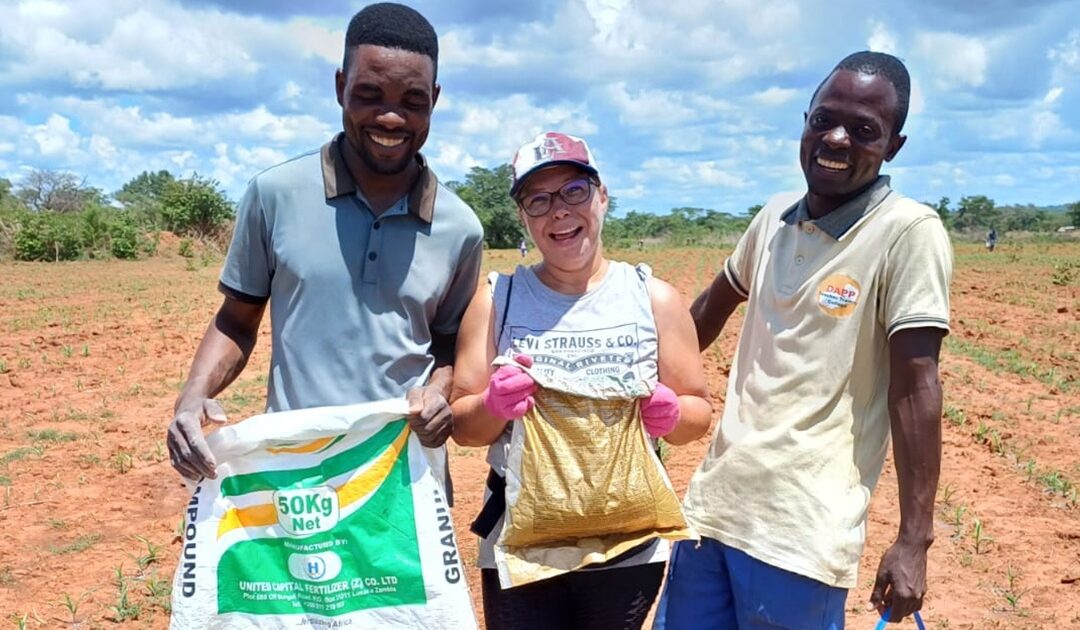
My name is Raquel Dávila, I am from Mexico and currently volunteering in Zambia as a Development Instructor (DI) with DAPP Zambia through CICD. When I first arrived in Zambia, I did not fully understand how much impact second-hand clothes can have in a community. Many...