By Melanie Pita, team teacher at CICD
From the teacher’s perspective
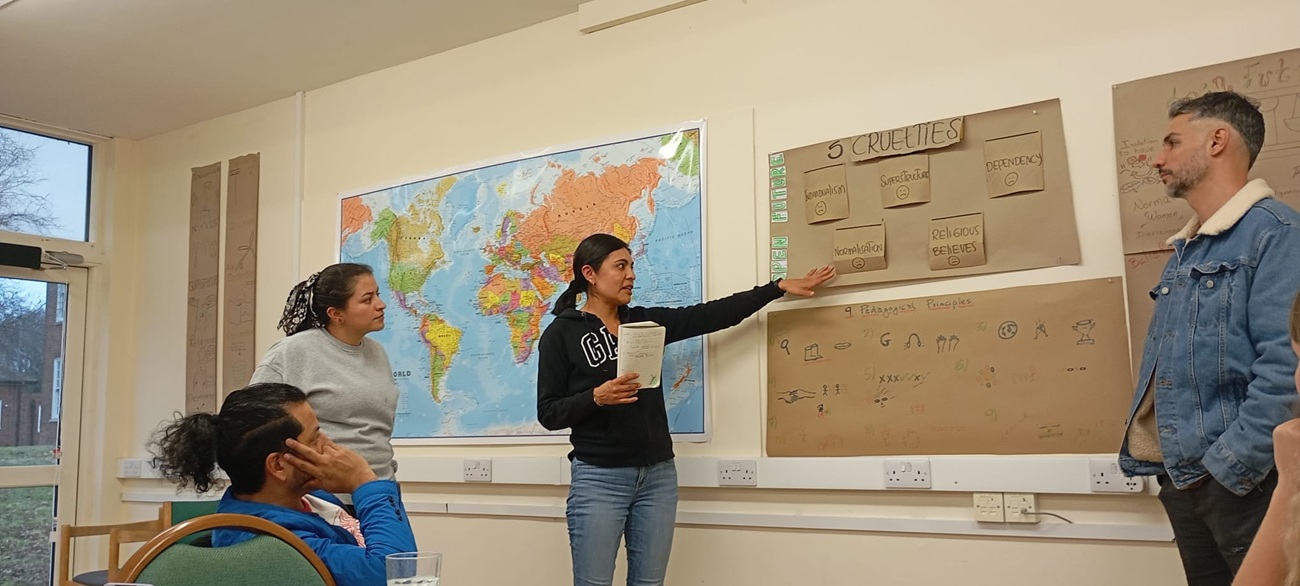
At CICD, teaching is not about standing in front of a classroom and delivering knowledge. That happens too but is way more than that! It is about creating the conditions for students to step into ownership of their own learning — to question, to explore, to lead, and to grow through experience. As a teacher in this environment, my role is not to direct every step, but to guide, challenge, and walk alongside them. Following the programme and owning the programme.
Education as empowerment!
When students are placed in the driving seat of their learning, something changes. Motivation becomes internal. Responsibility becomes real. Curiosity replaces compliance. Instead of learning because they are told to, they learn because they see meaning, relevance, and connection to the world they want to impact. This is where true involvement begins — and where real learning takes root.


Education, in this sense, becomes a process of empowerment. Students are not passive recipients of information; they are active participants shaping their own development. They learn to organise, to make decisions, to face challenges, and to find solutions. They learn to work with others, to listen, to disagree constructively, and to build something collectively. These are not just academic skills — they are life skills.
This approach is especially important in preparing students for their project period in an African country. Development work cannot be taught only through theory. It requires adaptability, empathy, initiative, and the ability to engage with communities with respect and collaboration. By taking responsibility for their learning before they go, students begin developing the confidence and awareness needed to work in complex, real-life contexts.
The role of Another Kind of Teacher
Our college is Another Kind of School, and my role in this process is that of a guide. I hold the space, ask the questions, ask them to ask questions, and support reflection. I help students connect their experiences with broader social realities and understand the impact of their actions. I encourage them to step forward when they hesitate and to pause when they need to listen.
Most importantly, I trust them — because trust is often the starting point for growth.
Uncertainty and setbacks are part of the process
Teaching in this way also means accepting uncertainty. Learning is not always linear. There are frustrations, setbacks, and moments of doubt. But these moments are part of the process and in my opinion also crucial. They teach resilience, self-awareness, and accountability. They help students discover not only what they can do, but who they are becoming.
Success, then, is not measured only by outcomes or results. It is measured by engagement, by courage, by the willingness to take initiative and to learn from mistakes. It is visible in the way students begin to see themselves as capable of contributing to the world, not just observing it. It is visible when students are inclusive of all people besides their closest friends


Learning to lead
When students take the wheel of their learning, education becomes more than preparation — it becomes transformation. And as a teacher, being part of that journey is not about control or authority. It is about accompaniment. It is about believing in their potential, even before they fully see it themselves.
Because ultimately, the goal is not to create students who follow instructions.
It is to nurture individuals who can think, act, connect, and lead — in their development projects, in their communities, and wherever life takes them.