By Skyi Baxter – Alleyne, Volunteer for Change team October 2025

A little about me

Hi, I’m Skyi — a 26-year-old qualified social worker with experience working across various teams within children’s services.

I come from a rich and diverse heritage, including Jamaican, Bajan, Indian, and English roots, which deeply influence my perspective, creativity, and passion for connecting with people from all walks of life.
I joined CICD because its mission and programs align with my long-term goal of making a meaningful impact in the world and helping to bring people together.

I was also looking to grow beyond traditional social work by developing my skills in a more hands-on, practical way — and CICD offered the perfect opportunity to do that.

Practical training is needed for the new challenges
Theory and practice go hand in hand

The Project: DAPP-s Children’s Town in Central Province, Zambia

In January, I will head off to ‘Children’s Town’ in the Central Province of Zambia with my trio, Alejandra and Antonio. Antonio will head to the ‘Young Farmer’s Club’ whilst Ale and I will work within the core group of teachers at Children’s Town.

Our role as Development Instructors will be to share qualitative inputs to the school, working with teachers on teaching and learning methods. We will also fundraise to support the school’s economy and activities, make the school visible to increase participation, and support with practical duties and other responsibilities.

Learning useful skills in Childrens Town
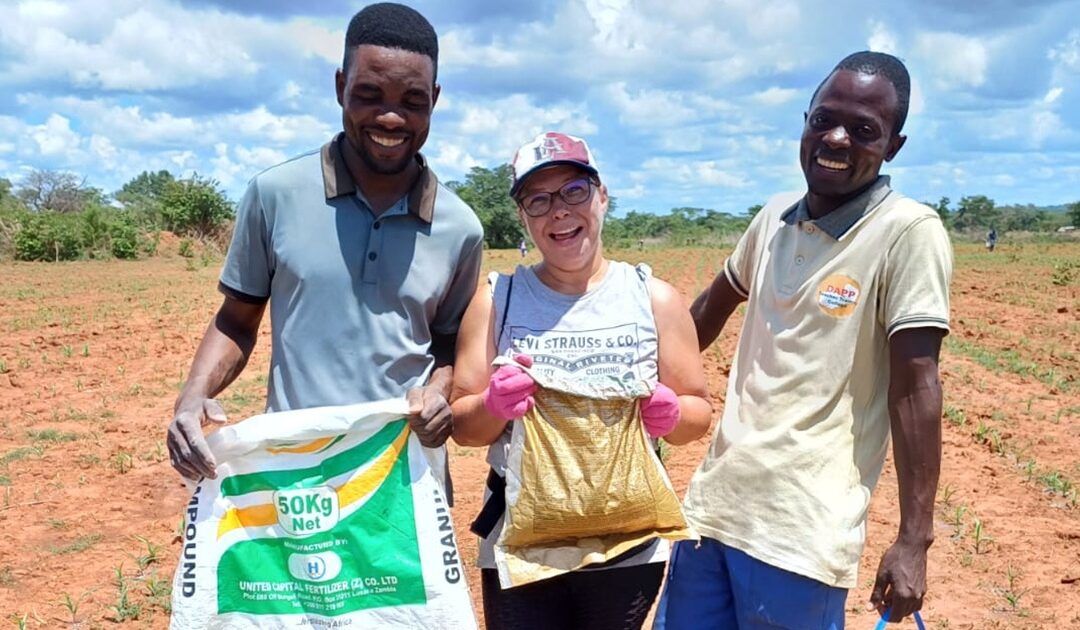
Providing food for the school

What I am Looking Forward to

I am look forward to working with the teachers at Children’ Town and to continue the existing work, adapt it where necessary/ or requested, and bring forward ideas based on the needs of the school.

I am mostly looking forward to being part of the work already being undertaken to ensure children living in difficult circumstances have access to a good education, that allows them to reach their greatest potential.

Preparing for the project

To prepare for the project I have set myself some tasks based on what the Project Leader at the project and my teacher have suggested.

Some of these include: learning some sentences in the local language, preparing useful resources or lesson plans, and equipping myself with useful practical skills I may need at the project.


Latest Blog Post

The Hidden Side of “Help”: Why We Need to Rethink Development

The Hidden Side of “Help”: Why We Need to Rethink Development

We usually don’t think twice when we hear the word “aid.” Most of us assume that helping someone is always a good thing—after all, how could giving to the poor be wrong? But I’ve realized that there is a big difference between just being “charitable” and actually doing development in a way that changes lives forever.

I used to think that poverty was just a lack of money, but the truth is often about a lack of
access. For a long time, the traditional “aid industry” followed theories that didn’t really work on the ground.
A powerful example of this is the story of Muhammad Yunus. He met a woman who had to borrow less than a dollar from a moneylender just to survive, but the terms were so bad she was basically a slave. He realized that by giving just $27 out of his own pocket, he could free 42 people from that cycle. This wasn’t just “giving money”; it was proving that the poor—especially women—are trustworthy and “credit-worthy,” even without any collateral.
Another thing I never really considered is that real help doesn’t always need a big institution. In many places, people are creating their own “financial inclusion” without any banks. For example, in Mali, women form small groups to save their own money and lend it to each other. It only costs about $20 to train a member, and then the group can run itself for years.

This is so much better than just a “handout” because it builds social capital—the women gain confidence, learn to lead, and even start their own businesses.

Finally, we have to look at how governments help. In Brazil, a program called Bolsa Família has liftedd millions out of poverty, but it isn’t just a “free gift”. Families only get the support if they meet social requirements, like making sure their kids go to school and get vaccinated. This way, the help isn’t just a temporary fix; it’s an investment in the next generation.

The more I learned, the more I saw that the best kind of development is about empowering people to be their own driving force for change. It’s about building their capacities, so they don’t need “aid” anymore.

My Personal Turning Point I never used to think about the “aid industry” this way. I just thought help was help. But exploring these different models and seeing how much impact
“doing it right” can have has completely shifted my perspective. This is exactly why I wanted to create this article: to tell you about my favourite course and why it changed my mind. It was through these specific lessons that I truly understood how we can move beyond simple charity to real, sustainable change.

Thanks for reading, a. see you soon!

Clothes & shoes sales creating change in Zambia

Clothes & shoes sales creating change in Zambia

My name is Raquel Dávila, I am from Mexico and currently volunteering in Zambia as a Development Instructor (DI) with DAPP Zambia through CICD. When I first arrived in Zambia, I did not fully understand how much impact second-hand clothes can have in a community. Many...