By Alejandra Avendaño, Volunteer for Change team October 2025
Richmond Vale Academy is a Climate Centre in Action.
After more than a decade of collaborative work between staff and students, the school has become a climate centre with more sustainable and self-sufficient systems that provide energy, gas, and water for daily operations and renewable resource management.
Solar Panels – own electricity off the grid
The school has 120 solar panels installed independently from the national grid, which can generate up to 70 kW per day, along with a battery bank with a capacity of 56 kWh. This allows for a continuous electricity supply even when the sun sets or clouds appear.
In the workshops, which are separate from the main buildings, there is an independent solar installation connected to the grid that contributes renewable energy to the rest of the island—all with the goal of achieving solar energy self-sufficiency.

Solar Water Heaters for kitchen and bathrooms
Water heating accounts for up to 25% of the energy used in a typical Caribbean household. However, less than 3% of energy in the Caribbean comes from renewable sources due to high financing costs. Thanks to a partnership with a local company in Saint Vincent that offers credit to households and businesses, the school has six solar water heaters that supply hot water to the kitchen and most of the bathrooms.
The solar heater works by taking water at room temperature and heating it as it flows through the collector. The hot water is then drawn from the tank as needed and used directly in the kitchen and showers.
Biogas for cooking
At Richmond Vale Academy, there is a small biogas digester that produces biogas from kitchen waste. It generates methane gas for up to five hours, which can be used for cooking, and a by-product of this process is a liquid fertilizer—excellent for home gardens and organic farming.
Biogas stands out from other renewable energy sources because it allows for the recovery, control, and reuse of organic waste. This makes a significant difference, as much of Saint Vincent still relies on harmful fossil fuels such as liquefied petroleum gas (LPG) for cooking.


Water Collection for bathrooms and garden
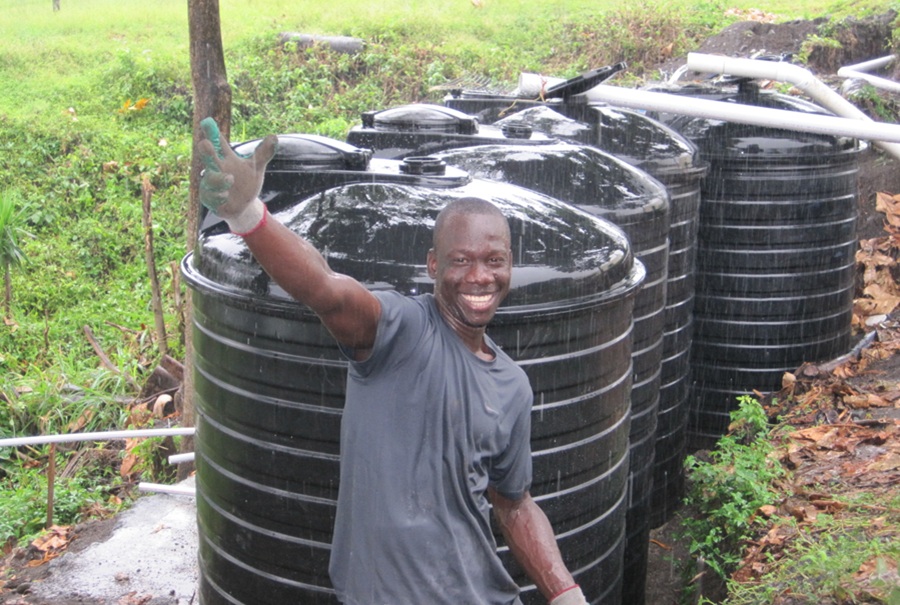
Rainwater: The water collected in four 1,000-gallon tanks are used for showers and toilets. The school also collects rainwater from the Academy’s rooftops and stores it in a 150,000-liter pool. This pool sustains millions of guppies and tilapia, which help control mosquito breeding. The water is used in the onsite garden.
Greywater: The school has a greywater system that collects and recycles water from showers and washing machines. This system is also planned to be used in the future for crop irrigation.
Climate Activism in daily life
Through supporting and learning from this low-carbon life style, as a Climate Activist you actively contribute to building a sustainable future. You share the knowledge you have gained with people around you – first at St Vincent and then back at CICD. This way you take an active part in the fight against climate change.