Theatre play about the power of the Media

Exam at a Different Kind of School? That’s a Peoples’ Exam!

When we are in a programme studying development around the world and we are looking for diversity, inclusion, peace, equality; then how can we talk about an exam to conclude some study periods?

Well our People’s Exam is like our school – it’s a “Different Kind of…”!

It’s one of the most exciting parts of the programme. It has the objective to conclude and reflect on what we have learned in each period and share it with our audience. So we look for a creative way to present all this.

Our last people’s exam was about “The forces that run the world”. It could be something very difficult to understand and very deep I think. We were talking about many interesting topics like the travel of humanity through feudalism, capitalism, imperialism and very recent like gun sales and inequality in many sectors like women’s rights, racism or indigenous groups; but we choose to focus just on one very important topic: “The 3 Ms”.
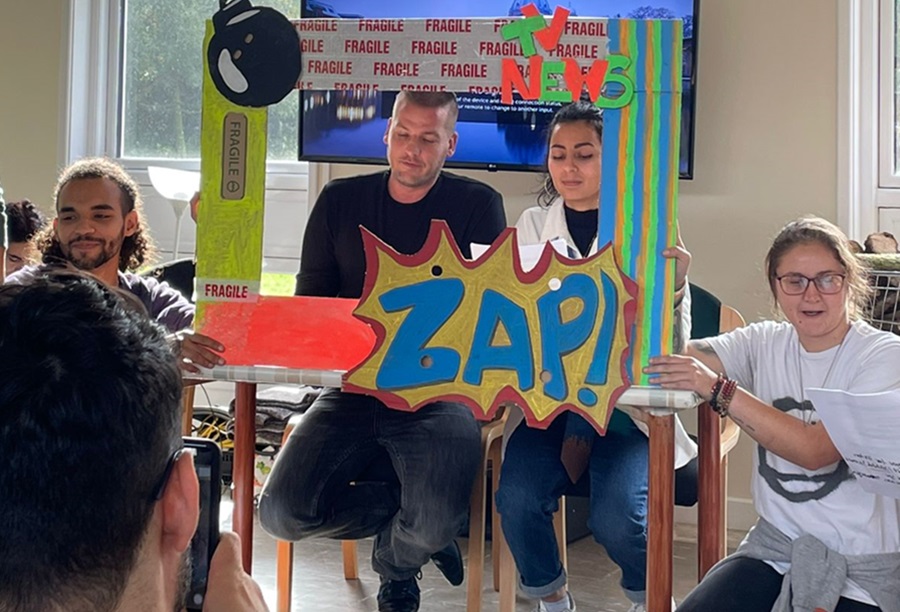
We illustrated one of the TV programme saying nothing for a long time
Fitting the puzzle together is one of the challenges of working in a team

The forces that run the world: Military – Money – Media

The 3 M’s are Military, Money and Media. We studied how these 3 forces work together, how they affect the population in different parts of the world by having more control and more power.
It’s so difficult to not get involved and upset when learning about this. But we learned to stop for a moment, research, listen and reflect about it – first with each other and then trying to spread the word – because this can be the beginning of something bigger.
It can make a real difference what we do, like many movements that have a lot of impact today.

For our People’s Exam then, we did a few different activities: a very fun role play with the 3Ms, one Tetris Game about our main challenges and highlights and a TV’s news show with some extra videos of our investigation trips. Also we made an exhibition with posters about all the topics that we learned in class. This gives you a quick idea of this one hour People’s Exam that we presented to all the people in the school.

Being here and sharing all the important things that we learned in this way is a really good experience. It makes you enjoy and want to continue with the programme.

By Alejandra Aguilar Bello, Poverty Activist team August 2023

Latest Blog Post

The Hidden Side of “Help”: Why We Need to Rethink Development

The Hidden Side of “Help”: Why We Need to Rethink Development

We usually don’t think twice when we hear the word “aid.” Most of us assume that helping someone is always a good thing—after all, how could giving to the poor be wrong? But I’ve realized that there is a big difference between just being “charitable” and actually doing development in a way that changes lives forever.

I used to think that poverty was just a lack of money, but the truth is often about a lack of
access. For a long time, the traditional “aid industry” followed theories that didn’t really work on the ground.
A powerful example of this is the story of Muhammad Yunus. He met a woman who had to borrow less than a dollar from a moneylender just to survive, but the terms were so bad she was basically a slave. He realized that by giving just $27 out of his own pocket, he could free 42 people from that cycle. This wasn’t just “giving money”; it was proving that the poor—especially women—are trustworthy and “credit-worthy,” even without any collateral.
Another thing I never really considered is that real help doesn’t always need a big institution. In many places, people are creating their own “financial inclusion” without any banks. For example, in Mali, women form small groups to save their own money and lend it to each other. It only costs about $20 to train a member, and then the group can run itself for years.

This is so much better than just a “handout” because it builds social capital—the women gain confidence, learn to lead, and even start their own businesses.

Finally, we have to look at how governments help. In Brazil, a program called Bolsa Família has liftedd millions out of poverty, but it isn’t just a “free gift”. Families only get the support if they meet social requirements, like making sure their kids go to school and get vaccinated. This way, the help isn’t just a temporary fix; it’s an investment in the next generation.

The more I learned, the more I saw that the best kind of development is about empowering people to be their own driving force for change. It’s about building their capacities, so they don’t need “aid” anymore.

My Personal Turning Point I never used to think about the “aid industry” this way. I just thought help was help. But exploring these different models and seeing how much impact
“doing it right” can have has completely shifted my perspective. This is exactly why I wanted to create this article: to tell you about my favourite course and why it changed my mind. It was through these specific lessons that I truly understood how we can move beyond simple charity to real, sustainable change.

Thanks for reading, a. see you soon!

Clothes & shoes sales creating change in Zambia

Clothes & shoes sales creating change in Zambia

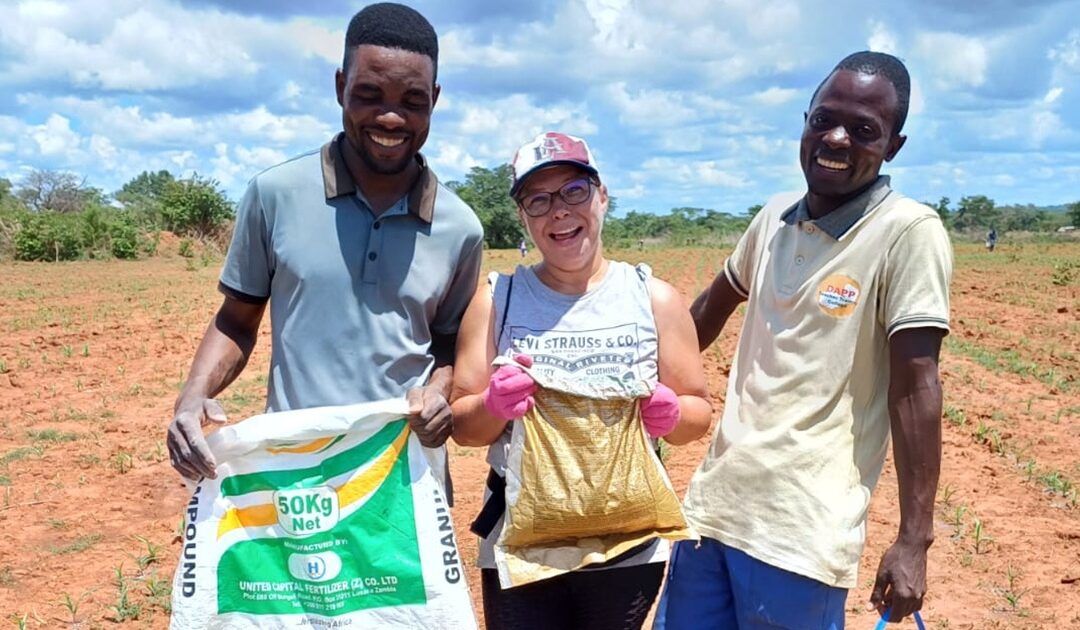
My name is Raquel Dávila, I am from Mexico and currently volunteering in Zambia as a Development Instructor (DI) with DAPP Zambia through CICD. When I first arrived in Zambia, I did not fully understand how much impact second-hand clothes can have in a community. Many...