Pauline Town outside her pub, that doubles as base for We Shall Overcome – feeding around 100 people every day….
Meeting activists fighting poverty in UK – Investigation week
Hello again,
We, the 12 month Poverty Activist team, would like to tell you a little about the great activists that we met during our latest investigation. This investigation was about the reality of the poverty in the UK and the people that are working together to help those facing poverty to better their lives.
Maybe it will be easier to present some numbers of the reality of the poverty in UK to help understand the dire need and the fantastic job those activists that we visited are doing:
A few statistics about poverty in UK
- More than 1 in 5 of UK population (22%) are living in poverty, approximately 14 million people, of those 8.1 million are working-age adults, 4.3 million are children and 2.1 million are pensioners.
- 227,000 families and individuals across UK are facing the worst form of homelessness, this includes people sleeping on the streets (rough sleepers), stuck in insecure accommodation like B&B’s, or forced to sleep in cars or sheds.
- They are facing hunger and malnutrition each day, and it is predicted that more families will have to make the hard decision of choosing between paying rent, food, heating or bills, due to the raising of food and energy prices.
We decided to carry out this investigation in two places, Manchester and here in Hull. Our aim was to find and visit local movements that were fighting to help and change this reality and compare what they are doing with the governmental services.
We Shall Overcome – The Station Hotel / Pauline Town
Pauline Town is a fantastic lady who runs a pub in Ashton under Lyne in Manchester, a pub that doubles as a We Shall Overcome hub in this town.
We Shall Overcome is a movement of musicians, artists and community organisers who are angry about the human costs of austerity policies and who want to do something practical to help those affected.
Pauline’s story started back in 2013, when a man who struggled with mental issues and was begging on the streets knocked on the door of her pub. She let him in for a cup of tea and during the next 5 months she helped to set up his personal independence payment and accommodation.
Nowadays Pauline, with help from 8 volunteers and community donations helps between 85 to 100 people each day by providing hot meals, food baskets and a lot of more services to help those people to get off the streets permanently. Pauline is networking with many charities and organisations and the local authorities in the Manchester area.
All the 8 volunteers helping Pauline have experienced homelessness themselves, but with the help of Pauline they managed to get back on their feet and now they are encouraging more people to do the same. Last year 218 homeless people were helped to move into a permanent or long term support living accom-modation.
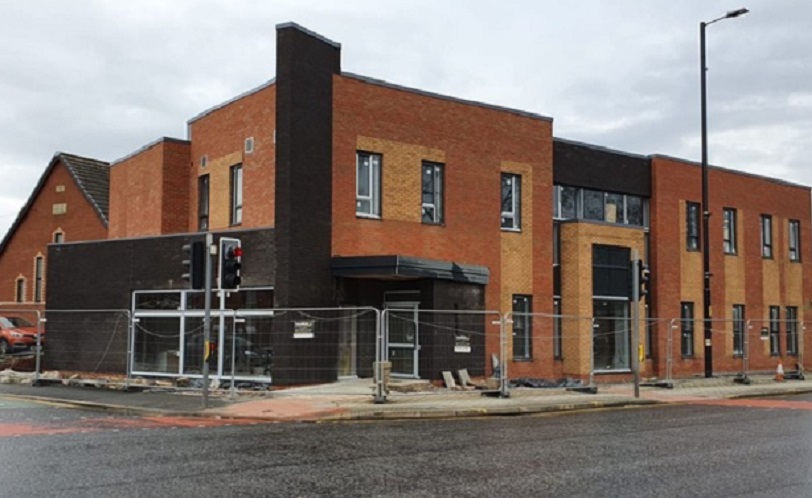

The Oasis Centre / Dushy Caldera
Our next stop was at the Oasis centre, this Christian charity that prides itself with accepting all people from different background in their centre. It is a centre that provide free food and meals, have a charity chop and educational services that include English, math courses, work club area which help people find jobs through learning CV building, interview techniques and computer skills, and many other activities that are aimed to help the people who are facing poverty, integrate them in the community and better their lives. They receive 80-100 people every day, with total dependence on donations with no government fund.
There we met Dushy Caldera, the centre manager who started working there 13 years ago, and was herself a client here before but thanks to the help she received from the centre now she is herself trying to help other do the same.
The River, Manchester / Lydia Chan
The founder Lydia Chan has worked in the charity sector for over 12 years with a focus on poverty and homelessness. But when approached by a woman who was struggling to cope after fleeing domestic abuse with her 10 year old son, Lydia was compelled to arrange food parcels, furniture and a team of volunteers to help them settle in their new accommodation and feel like home.
Now, the River Manchester is a centre that focus on empowering survivors of domestic violence. It has a charity chop that helps financing the different activities that the centre provides, such as:
- Emotional support
- Mental health support
- Safety support
- Clothing and food parcels
- Helping the survivors move from place to place if they are in danger
The centre concentrates on helping women and children, mainly through referrals from the social services with the help of 12 volunteers, who are mainly survivors themselves that help in the shop or driving the moving vans as part of their empowerment and job skills training.
At the beginning the centre was helping 30 women a month, now it has became 30 each week.
Failsworth Community fridge
It is a place where anyone who are struggling to afford the basics can come and get free food and hygiene products. As opposed to a foodbank, however, they do not require any token or voucher or proof of income to get support. They rely on donations from students, as well as external donations from the public and businesses. Anyone can donate and anyone can use the Community Fridge.
Oldham foodbank
Oldham foodbank is a collaboration of local churches and community groups of all denominations and faiths (or none), working together toward stopping hunger in the Oldham area.
They started 10 years ago to help people who were referred to them, by delivering food parcels to their home. Then they were delivering 10 -15 parcels a day – now it has become 60 parcels a day.
Oldham foodbank is similar to a normal foodbank in the way that they use the voucher system, but they differ in the amount of food given (food for 1 week instead of 3 days) and that they include fresh food and frozen meat in their parcels.
Raise the Roof, Hull / Carl Simpson
We finished this investigation period in Hull, where we visited Raise the Roof to ask about the reality of the poor there and how it all started.
Carl Simpson is the person who created and who is running the Association since 2015. Back at that time, after facing a difficult personal struggle, Carl wanted to retribute the good that the community had given to him. He started by cooking burgers and distributing them to the homeless from his van. Now his group is providing hot meals 3 days per week in the street kitchen post in the centre of Hull for 70 people per meal, as well as daily meals and sandwiches in the Raise the Roof kitchen.
He is helping people to get off the street, into accommodation and supporting them to create a life where they can be self-sufficient. They also offer job training and social skills training, supporting those who need help during rough times.
All this is done through donations from the community and the 10 volunteers that help there each day.
Our conclusion
What we saw during our investigation, and the numbers that we heard in each organisation helped us to really see the dire situation that those affected by poverty face on daily basis. They receive little help from the government and this puts big pressure on charities and communities to help them.
All the organisations that we visited and the people we talked to all said the same thing: more help is needed. Things will even get worse in the coming months during the winter. Due of the rising cost of food and fuel, more people will be facing poverty and find themselves at risk of becoming homeless when they have to choose between feeding their family or paying the rent.
Since this is affecting everyone, the donations that the supporting teams are receiving are decreasing already, so there will be more need for help but with less donations than usual available…..
But there is still hope. Every organisation we visited showed us that if there is a will, people can find solutions by working together and helping each other. What in a lot of cases started with an initiative of one activist or a small group of activists, has grown and become bigger and is helping and uniting a lot of people to face the difficulties together.
By Monzer Al Moussa, Poverty Activist team August 2022